Professional Journey
My journey toward becoming a writer began in my early twenties with a quiet, persistent whisper from my intuition: Write a book.
It sounded like far too much work, and I didn’t believe I had anything meaningful to say—nor the credentials to say it. Still, the whisper persisted. I studied writing on my own, drafted scenes and chapters, and experimented with ideas. But nothing took hold; it was never compelling.
Life moved forward. I married, we were blessed with identical twin sons, extended family nearby, and a beautiful, middle-class Midwestern life.
And then the hellscape began to unfold.
Despite an idyllic upbringing, my sons began spiraling into drug addiction. It is an experience beyond language—the ongoing terror, the helplessness, the loss of the family life we’d dreamed of and worked for. Amid the struggle to keep them alive—and to survive myself—the whisper persisted, but I was far too overwhelmed to pay attention.
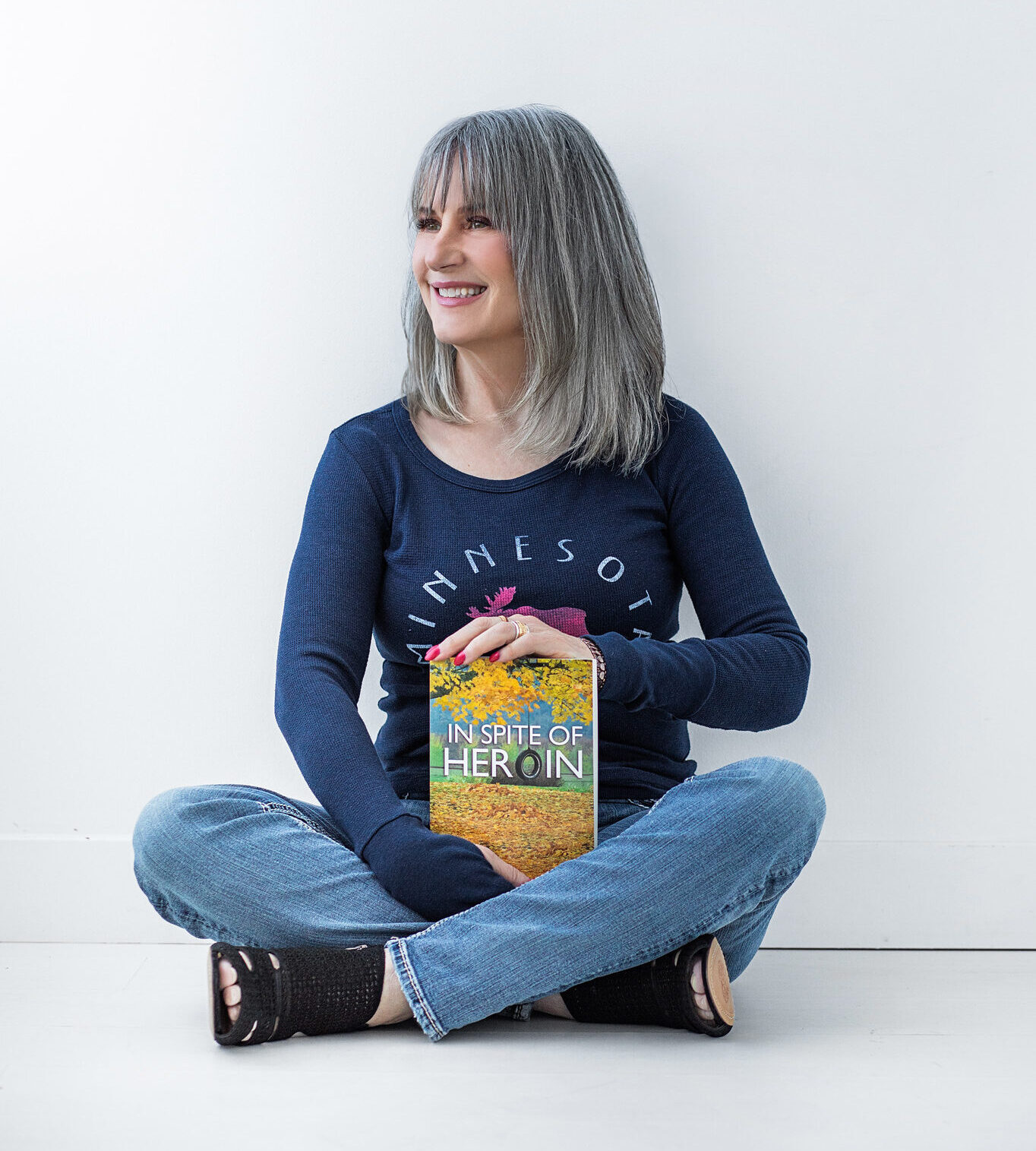
In Chapter 24 of In Spite of Heroin, I recount the moment I finally understood what that whisper had meant. On my knees for what felt like the thousandth time, I asked God, –Why my family, why my children?
On that Fourth of July night, the truth came quietly but unmistakably: our family was living the story that was destined to be written. All those decades of hearing, ‘write a book,’ were preemptive.
I remember asking, so this is the book that’s been whispering all these years. I just had to live it first?
The answer was yes.
The fourteen years of terror weren’t caused by flawed character or failed parenting. Instead, I believe on a soul level that we four had agreed to our roles. Mine was to be the mother and the author. And God willing, our story would reach a wide audience and help others.
More About Cullen
Believing that fulfilling this destiny might somehow save my sons, I began writing In Spite of Heroin in 2015. It was grueling. It was not cathartic. I was living the nightmare while documenting it—reliving scenes, deciding what to include, layering past pain onto present fear. It felt like a sandwich of misery.
But hope compelled me. I would try anything to save my sons.
The book was self-published in 2016. I quickly learned the harsh realities of self-publishing: when the money runs out, so does the promotion. Disappointed, I released the outcome. I had done what I believed I was meant to do.
In 2024, while walking with a friend, she suggested I try again—seek an agent, pursue traditional publishing. I told her I was done pushing. The same forces that brought this story into my life could bring the right person forward to champion me to bring it to the world.
Two months later, I received an email from Director Ed McDonald of Omnibusworks expressing interest in adapting the book for the screen.
We began collaborating, though progress was slow. Revisiting the material while still living aspects of it proved difficult. One son had recovered. One had not. The project stalled.
I began to ask myself: Why is this so hard? Is something else trying to arrive?
I shared with Ed an idea for a fictional screenplay I had titled Saint Mistress. I pitched it. He said it was brilliant—something Hollywood hadn’t seen—and encouraged me to write it when ready.
So I set In Spite of Heroin aside and invited Saint Mistress in.
She arrived with horns blaring, busting down the door, demanding to be written. I experienced three weeks of typing as fast as I could- all the while synchronicity, coincidence- divine timing- signs from above coaxed me along. It was ‘other-worldly’.
I wrote the 120-page screenplay in three weeks. Ed was stunned and invited me to expand it into a six-episode limited series. I agreed, grateful for the room to deepen what I had only begun to explore in the feature version.
And that is how this next chapter of screenwriting began.